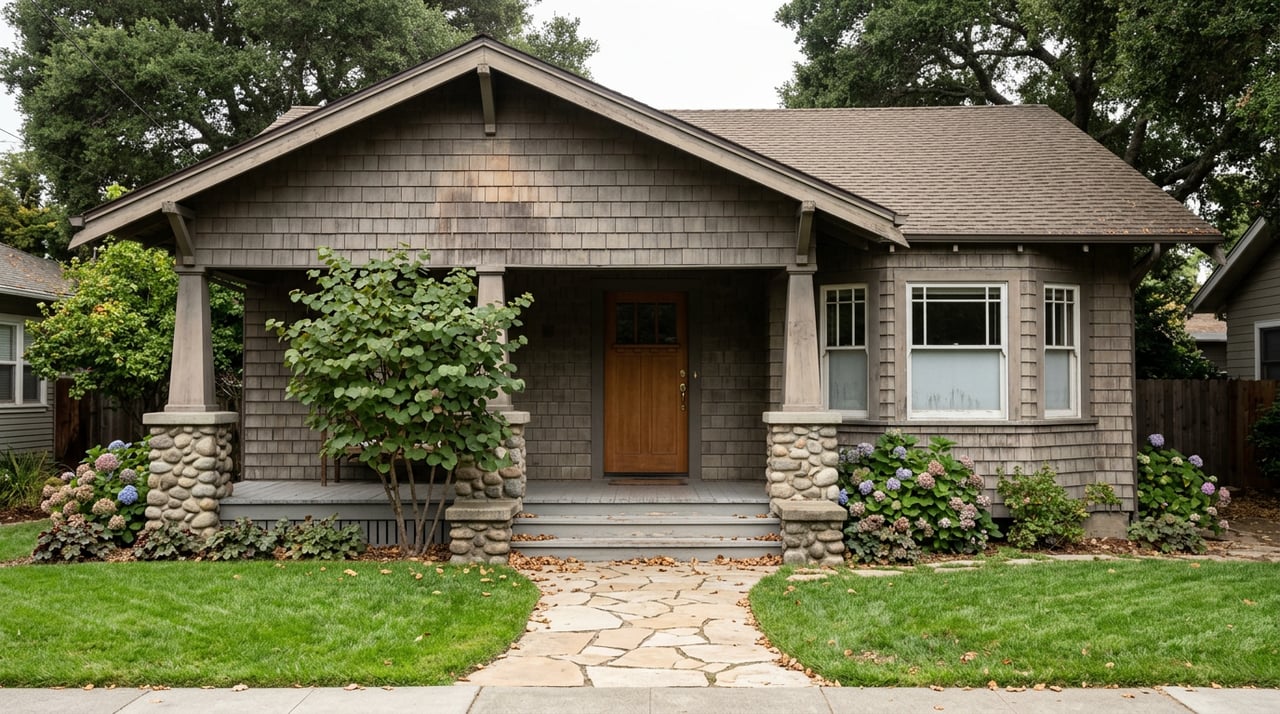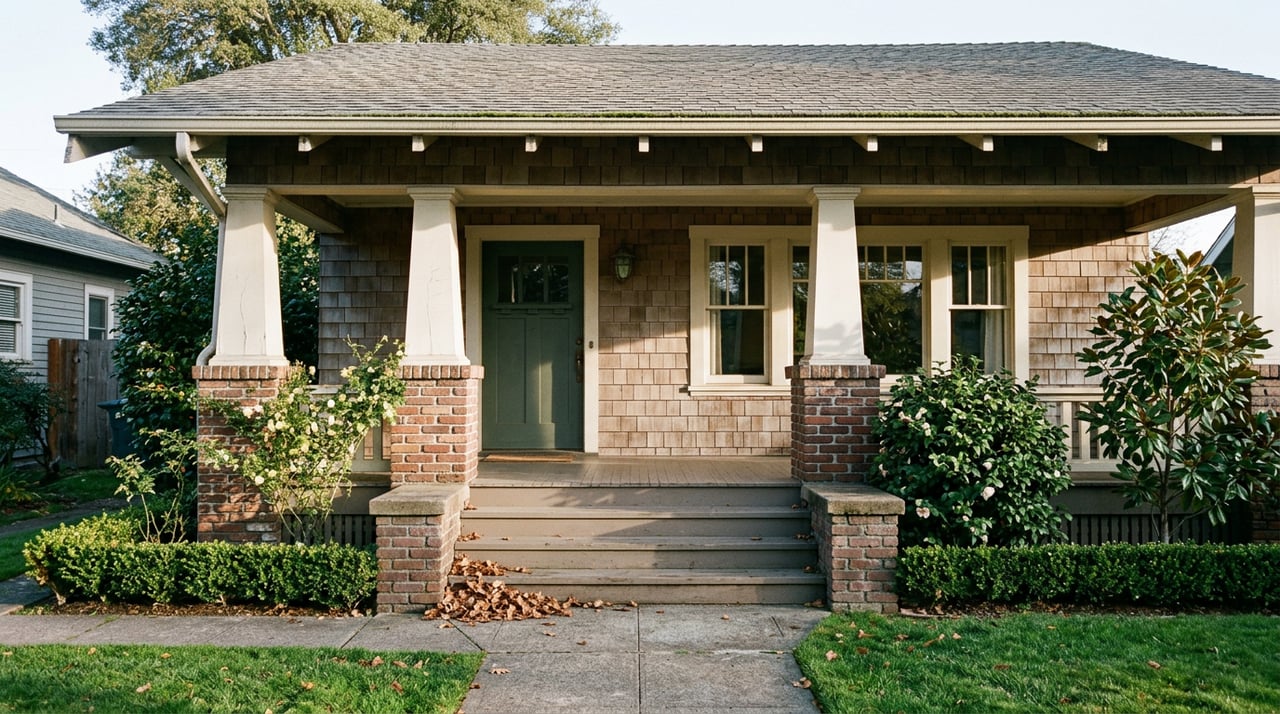
A buyer closes on a Craftsman bungalow in Bungalow Heaven, budgets three weekends and a modest line item to swap out the original wood-sash windows for something more efficient, and then finds out the swap is not theirs to make. Under the neighborhood's historic overlay, those windows are considered a defining feature of the house. Vinyl replacements are effectively off the table, and even an appropriate wood replacement has to clear a design review before a contractor can touch the frame.
That single fact tends to surprise people who assumed a similarly priced Craftsman across town in Madison Heights comes with similar rules. It does not. Both are among Pasadena's best-known Craftsman pockets, but one operates under a historic designation that governs what you can do to your own exterior, and the other does not. Understanding why that distinction exists, and what it actually costs and saves, is the difference between pricing a Pasadena Craftsman correctly and guessing.
The line you can't see from the street
Bungalow Heaven became Pasadena's first Landmark District in 1989 and was later added to the National Register of Historic Places. That designation created a Historic Preservation Overlay Zone, commonly shortened to HPOZ, covering roughly sixteen blocks of early twentieth century Craftsman homes in north central Pasadena. Madison Heights, a Craftsman-heavy pocket of south central Pasadena between Old Town and the South Lake shopping district, has no such overlay. Same city, similar architectural period in many cases, different rulebook.
Inside the HPOZ, any exterior change to a contributing structure needs a Certificate of Appropriateness before a building permit can even be issued. That covers a longer list than most buyers expect:
- Window and door replacement
- Changes to exterior siding material
- Additions and new garages
- Front porch reconstruction
The city's own review process for these applications runs 30 to 90 days depending on scope, and staff reviews minor projects while the nine-member Historic Preservation Commission, which meets on the first and third Mondays of the month, reviews major ones. There is no fee for the review itself, but there is a real calendar cost. If you are planning a renovation timeline around a move-in date, that window matters more than the price per square foot.
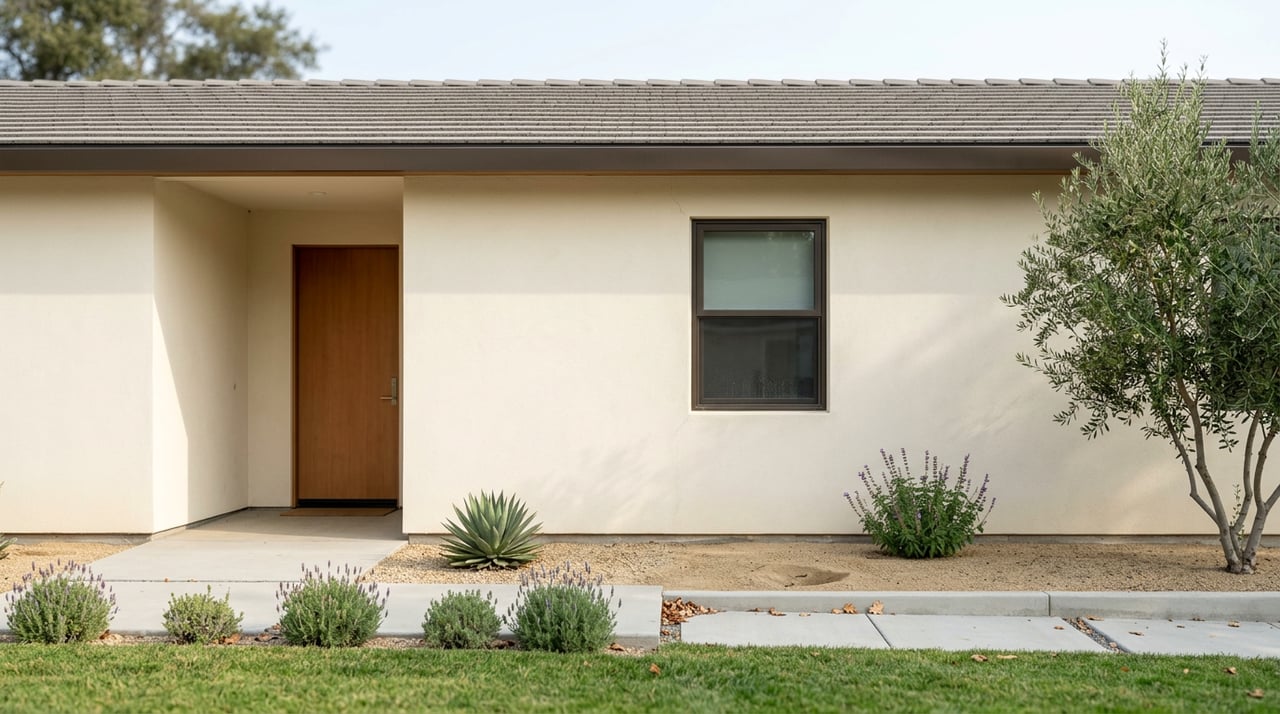
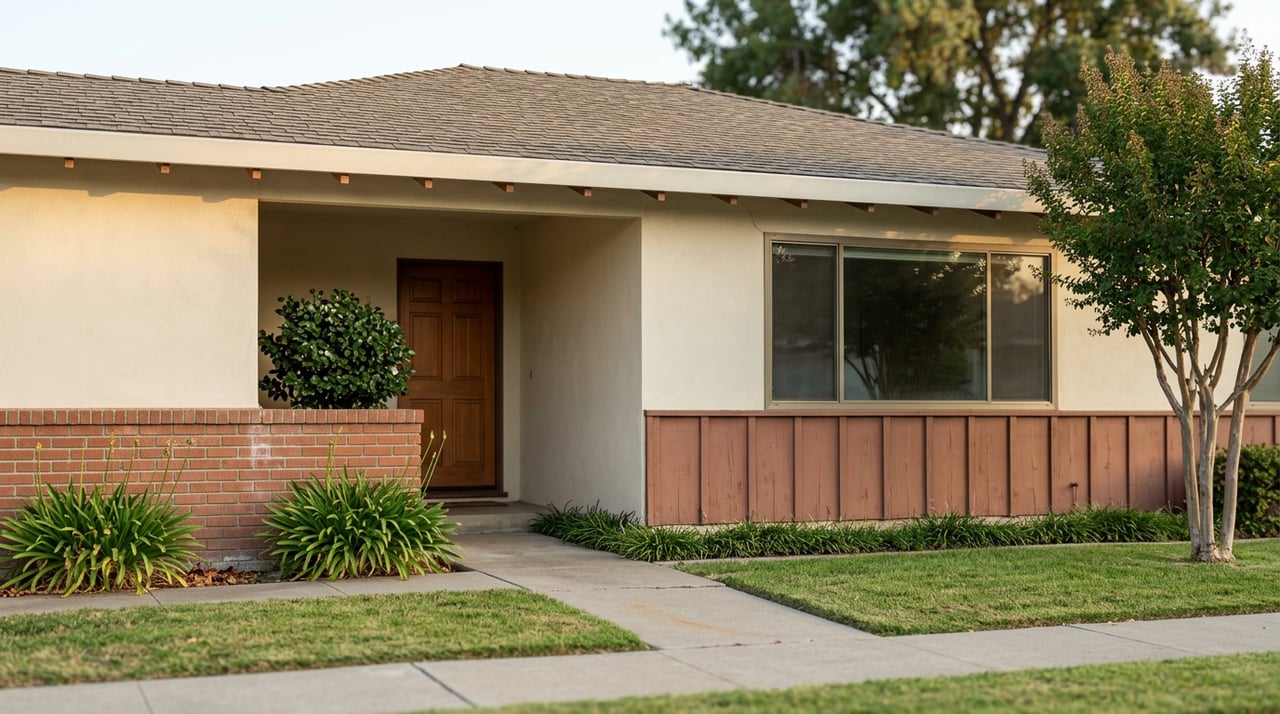
Madison Heights buyers skip all of this. Want to repaint, replace a window, add a fence, or push out a kitchen wall on the exterior elevation? You still need permits, but you are not waiting on a design review keyed to the Secretary of the Interior's Standards.
The trade nobody prices into the offer
Here is where the story gets more interesting than "one neighborhood has more rules." Bungalow Heaven's designation is also what makes a Bungalow Heaven property eligible for a Mills Act contract with the city, a preservation agreement that can meaningfully lower the annual property tax bill in exchange for a decade of maintenance obligations.
Pasadena's own 2026 Mills Act guidelines put historical average savings at 51 percent, with a typical range of 40 to 60 percent, achieved because the county assessor values the property using an income approach rather than a standard market comparison. The contract runs for an initial ten years, renews automatically unless either side files for non-renewal, and stays with the property through a sale, which means the obligations transfer to the next owner along with the tax benefit. Break the agreement and the cancellation fee is steep: 12.5 percent of the property's current assessed value.
One Bungalow Heaven property that came to market this year illustrates the appeal directly. Built in 1885 and moved to its current lot in 1905, the home already carries a recorded Mills Act contract, meaning its buyer inherits both the tax treatment and the maintenance commitment that produced it. That is the kind of detail a comps sheet will not surface but a title report will.
Madison Heights homes, without the HPOZ designation, do not have this door open by default. An owner could pursue individual landmark status and then apply for a Mills Act contract on their own, but it is not baked into buying there the way it is in Bungalow Heaven. The neighborhood's lower renovation friction comes at the cost of a tax relief pathway that Bungalow Heaven buyers get simply by choosing where to buy.
| Bungalow Heaven | Madison Heights | |
|---|---|---|
| Historic overlay | HPOZ, Landmark District since 1989 | None |
| Exterior renovation review | Certificate of Appropriateness required, 30 to 90 days | Standard permitting only |
| Original windows | Generally cannot be replaced with vinyl | No restriction |
| Mills Act eligibility | Built into designation | Requires separate landmark application |
| Typical price, intact examples | Roughly $1.1 million to $1.6 million as of August 2026 | Roughly $1.1 million to $1.4 million as of 2026 |
Why the same tax break can be worth nothing to your neighbor
The part that catches people off guard is that Mills Act savings are not a flat percentage everyone gets. They depend on how the county's income-based valuation compares to what the property would otherwise be assessed at, and that comparison changes entirely based on when you bought.
A buyer who closes this year at current market price and then records a Mills Act contract is typically comparing the income-based figure against a fresh, full market assessment. That is where the 40 to 60 percent range shows up. But an owner who has held the same Bungalow Heaven house for twenty years is sitting on a Proposition 13 base year assessment that has grown slowly and predictably the entire time. Run that owner's home through the Mills Act formula and the income-based number can land at or above what they are already paying. The city is explicit about this: results vary widely by property, and long-time owners in particular should not assume a Mills Act contract improves their bill.
This is the actual mechanism behind the price gap between these two neighborhoods, and it is not simply "historic homes cost more because they are prettier." A recent buyer in Bungalow Heaven is paying a premium partly for access to a tax relief tool that works best for exactly their situation, a fresh purchase. A long-tenured owner in the same house is often better off leaving well enough alone. Madison Heights buyers are not weighing any of this, because the tool was never on the table to begin with.
What this actually means if you're comparing the two
If you are deciding between these neighborhoods, the median price gap is the least useful number to anchor on. The more useful questions are how long you plan to hold the property and how much exterior renovation you expect to do.
A buyer planning to gut and modernize the exterior, replace windows for efficiency, or add square footage should treat the HPOZ timeline as a real cost, not paperwork. Thirty to ninety days per application adds up fast on a full renovation, and some changes, like vinyl window replacement on a contributing structure, are not approvable regardless of budget. Madison Heights removes that friction entirely.
A buyer planning to hold for a decade or more, and comfortable with the maintenance obligations that come with a Mills Act contract, gets a real shot at cutting the annual tax bill by close to half. That benefit compounds every year the contract is in place, which is part of why Bungalow Heaven Craftsman homes with an existing Mills Act contract tend to draw serious interest. The contract already runs with the house.
Neither answer is right for every buyer. But treating the two neighborhoods as interchangeable Craftsman inventory at slightly different price points misses the actual trade being made, and that trade is worth pricing in before you write an offer, not after a window permit gets denied.
A few questions worth asking before you write an offer
Does a Mills Act contract automatically transfer if I buy a home that already has one? Yes. The contract is recorded on title and binds future owners to the same maintenance terms and the same assessment approach, which is why a recorded Mills Act home is worth confirming with the title company before close.
Can I get out of a Mills Act contract if my plans change? You can file for non-renewal, but breaching the agreement outright triggers a cancellation fee equal to 12.5 percent of the property's current assessed value, so this is not a decision to make lightly partway through a renovation.
Does the HPOZ review apply to interior work? No. Certificate of Appropriateness review covers exterior alterations visible from the street. Interior renovations, landscaping, and routine maintenance are exempt.
If you are weighing a purchase in Bungalow Heaven, Madison Heights, or anywhere else in Pasadena's patchwork of historic districts, the numbers on a listing sheet only tell part of the story. Tony Dowdy has spent years walking Pasadena buyers and sellers through exactly this kind of neighborhood-specific fine print. Reach out for a conversation about what a given address actually commits you to, or get a free home valuation to see where your property stands today.